xpander.ai
Efficiently build, deploy, and scale AI agents.
About xpander.ai
Advertiser Disclosure: Futurepedia.io is committed to rigorous editorial standards to provide our users with accurate and helpful content. To keep our site free, we may receive compensation when you click some links on our site.
Key Features
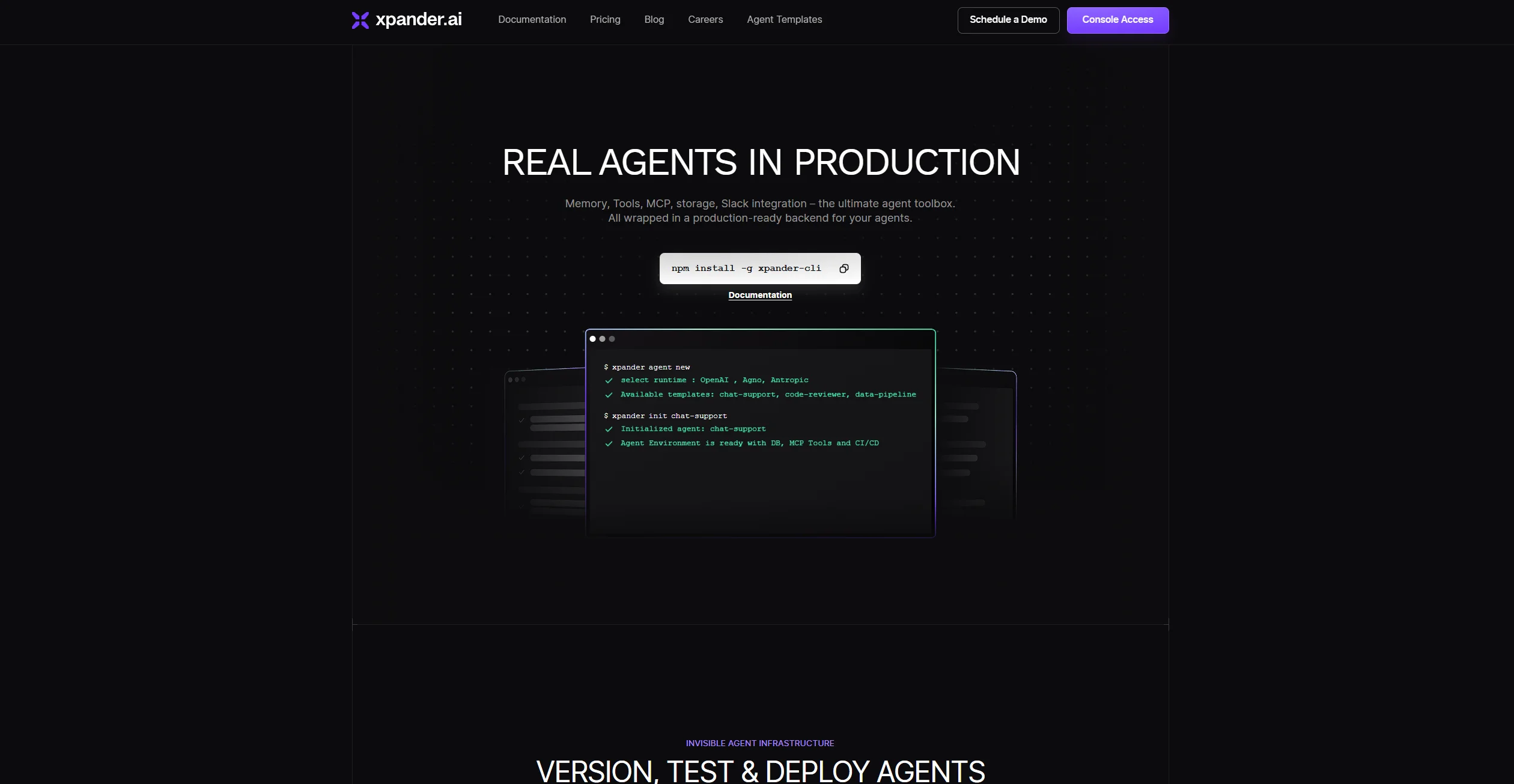
- Agent Templates: xpander.ai offers ready-to-use templates for various applications such as chat support and code reviewing, enabling quick deployment.
- MCP and Tool Repository: Access over 2,000 tools and connectors, or create custom tools for any private API, enhancing agent capabilities without additional setup.
- Event Streaming: Unified event streaming allows agents to receive prompts from sources like Slack and web interfaces, managing the heavy lifting behind the scenes.
- Multi-Agent Orchestration: xpander.ai supports the orchestration of complex tasks across multiple agents, ensuring fault tolerance and seamless memory management.
Pros
- Rapid Development: xpander.ai accelerates the development lifecycle, allowing new agent versions to be built, tested, and deployed in under an hour.
- Infrastructure Management: The platform manages all backend infrastructure, reducing overhead for developers and allowing them to focus on business logic.
- Scalability: Designed to support growth, xpander.ai allows users to scale their agent operations efficiently.
- Integration Capabilities: Deep integration with communication platforms like Slack and Teams ensures agents are accessible where users need them.
Cons
- Initial Learning Curve: New users might need time to familiarize themselves with the platform's features and functionalities.
- Limited Customization: While offering a wide range of tools, customization options may be limited for highly specific use cases.
- Pricing Transparency: The lack of clear pricing details on the website could be a barrier for potential users evaluating the platform.