UiPath
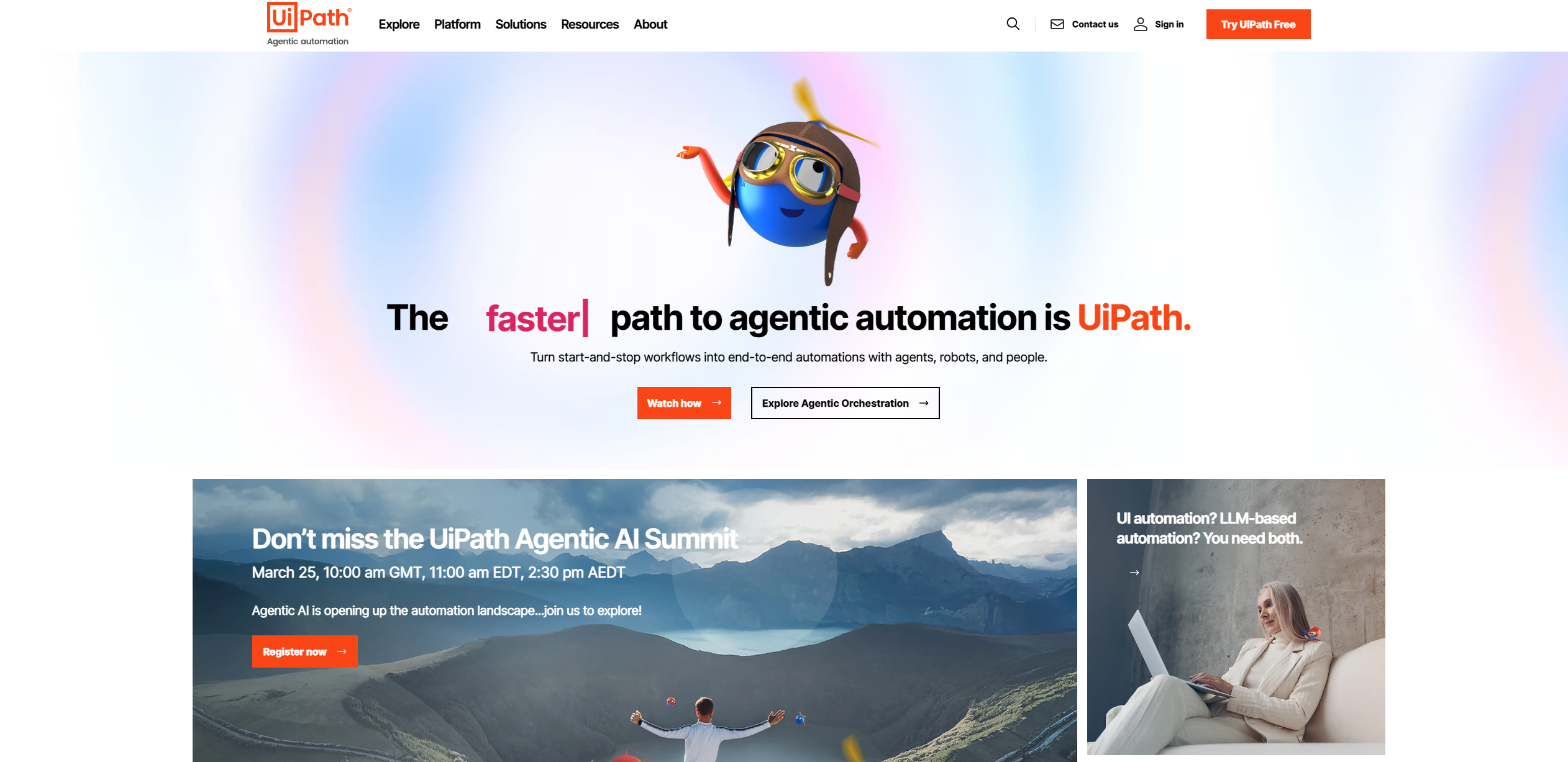
Streamline workflows with AI-driven automation and seamless integration.
About UiPath
Advertiser Disclosure: Futurepedia.io is committed to rigorous editorial standards to provide our users with accurate and helpful content. To keep our site free, we may receive compensation when you click some links on our site.
Key Features
- AI-Powered Automation: UiPath utilizes cutting-edge AI algorithms to automate repetitive tasks, reducing human error and increasing efficiency.
- Process Mining and Task Mining: These features help organizations identify high-value automation opportunities by analyzing business processes and tasks.
- Low-Code Development: With an intuitive, low-code environment, users can quickly develop and deploy automation solutions without extensive programming knowledge.
- Intelligent Document Processing: Leveraging AI, UiPath can process and understand unstructured data from documents, enhancing data accuracy and speed.
Pros
- Scalability: UiPath offers enterprise-grade scalability, allowing businesses to expand their automation efforts seamlessly.
- Comprehensive Analytics: Real-time analytics provide insights into automation performance and ROI, facilitating data-driven decision-making.
- Wide Integration Capabilities: UiPath supports integration with numerous third-party applications and platforms, enhancing flexibility.
- User-Centric Design: The platform is designed with a user-friendly interface, making it accessible to both technical and non-technical users.
Cons
- Initial Learning Curve: New users may require time to fully understand and leverage the platform's advanced features.
- Resource Intensive: High-level automation projects may demand significant computational resources.
- Pricing Complexity: The pricing structure can be complex, potentially requiring consultation for optimal package selection.