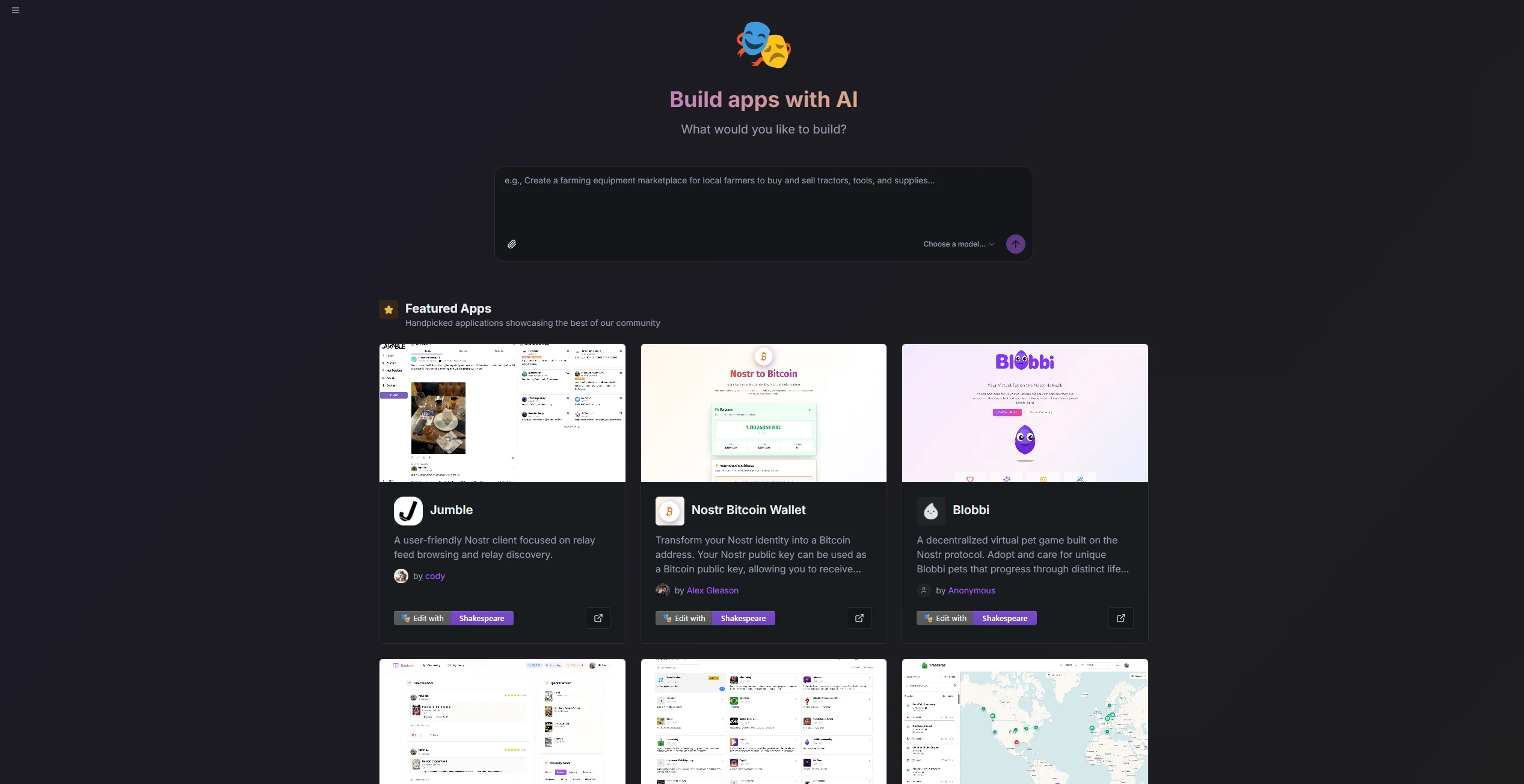
Shakespeare
Build, edit, and deploy fully customizable AI websites.
About Shakespeare
Advertiser Disclosure: Futurepedia.io is committed to rigorous editorial standards to provide our users with accurate and helpful content. To keep our site free, we may receive compensation when you click some links on our site.
Key Features
- AI-Assisted Development: Generate, edit, and debug code directly with built-in AI support for faster iteration and cleaner results.
- Multi-Provider AI Framework: Choose from over 40 AI models across different providers—or connect your own for more advanced features.
- Local or Cloud Execution: Run AI models locally for privacy and speed or use cloud-based options for scalability.
- Version Control System: Manage revisions and collaboration through integrated version tracking and rollback features.
- One-Click Deployment: Publish sites quickly to custom subdomains or popular hosting platforms with minimal setup.
- Full Data Ownership: Retain complete control over your site’s data and code, with full export and portability.
Pros
- Completely Free Framework: Shakespeare’s core platform and toolkit are open-source and free to use.
- Flexible AI Access: Advanced users can enhance capabilities by connecting their own API keys—though it’s entirely optional.
- Privacy First: Local AI models allow for secure, offline development.
- Developer-Friendly Design: Combines the power of code-level editing with the convenience of AI-driven assistance.
Cons
- Slight Learning Curve: Some setup knowledge helps when configuring AI providers or local models.
- Limited Templates: Prioritizes flexibility over plug-and-play templates.
- Community-Based Support: As an open-source platform, support resources rely on documentation and user communities.