Playcode
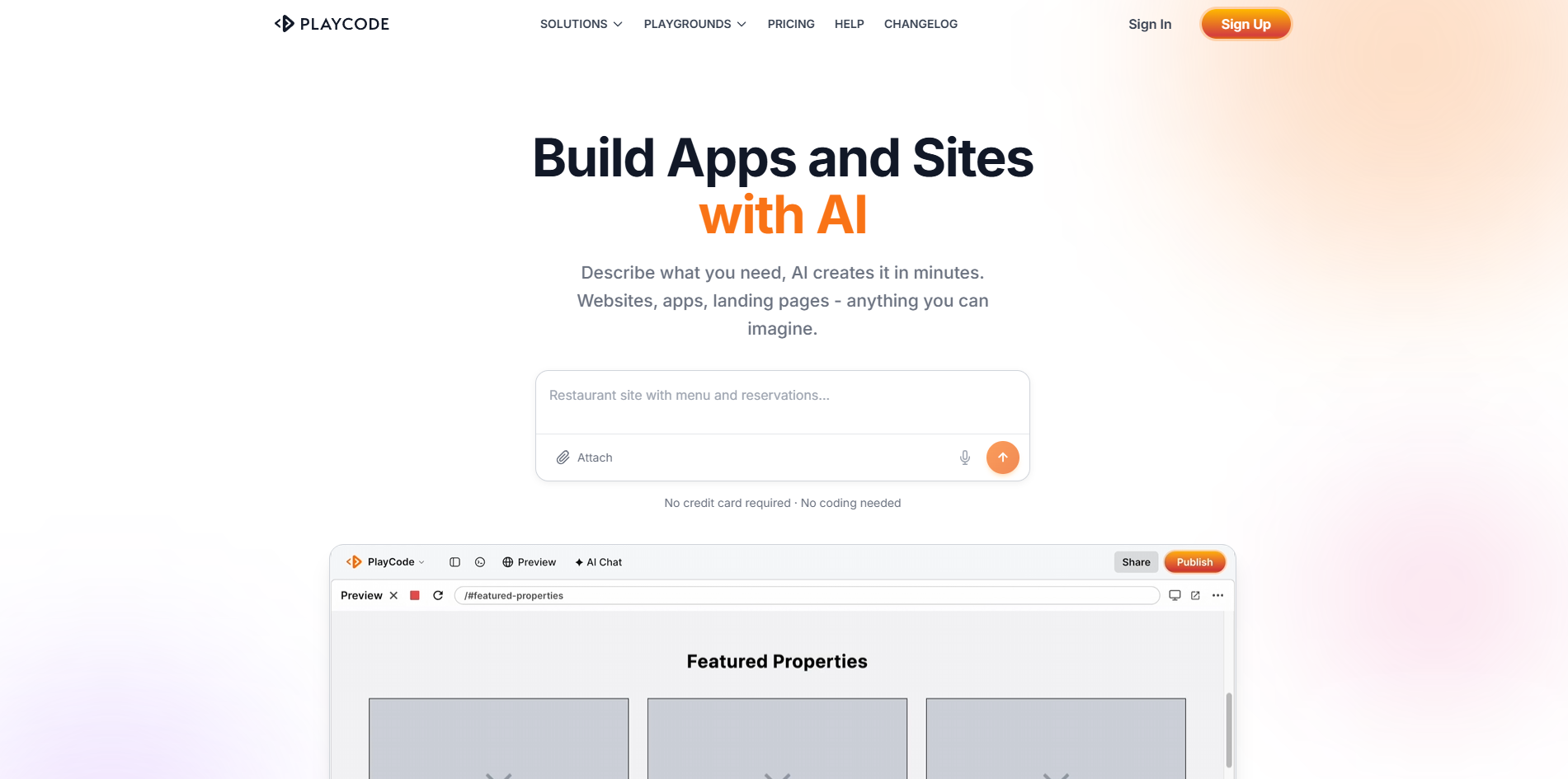
Describe it; get live, editable sites and apps.
About Playcode
Advertiser Disclosure: Futurepedia.io is committed to rigorous editorial standards to provide our users with accurate and helpful content. To keep our site free, we may receive compensation when you click some links on our site.
Key Features
- Conversational AI site builder: Users describe their business by voice or text; the assistant asks clarifying questions and generates layout, copy, and structure in minutes.
- AI generated visuals: The system produces logos, hero images, and icons on the fly, and can restyle or rebuild existing sites from a URL while keeping business details.
- Visual editor plus real code: Every project exposes editable React, Vue, or HTML code with version history, alongside a point and click editor and an AI powered code generator.
- Built in hosting and PWAs: Sites and mini apps publish to Playcode’s global CDN with HTTPS, custom domains, and Progressive Web App support for offline friendly mobile experiences.
- Developer playgrounds and utilities: Browser based sandboxes for JavaScript, TypeScript, Python, C, C++, Go, and PostgreSQL, plus tools like JSON formatters and a live coding interview mode.
Pros
- Fast idea to production: Non technical users can move from a short brief to a live, hosted site in roughly the time a traditional builder spends on template selection.
- Friendly for non coders: Natural language prompts, guided questions, and support for dozens of languages reduce friction for small business owners and solo operators.
- Appealing to developers: Full code access, npm packages, export to other hosts, and version history keep technical teams in control instead of locked into a pure black box builder.
- Good value for small teams: The Pro plan sits at $21 per month with hosting, AI generation, and collaboration, which competes well with template builders and sits far below typical agency fees.
Cons
- AI credit model: Heavy users who constantly regenerate pages or visual assets may find the credit system restrictive and need to watch usage.
- Limited plug and play integrations: Out of the box connections to third party marketing, CRM, or e commerce tools appear less prominent than in some specialist platforms, so custom coding may be required.
- Result quality still varies: While layouts are modern, design conscious brands may still want manual tweaks to typography, spacing, and imagery to match strict guidelines.