Pandada AI
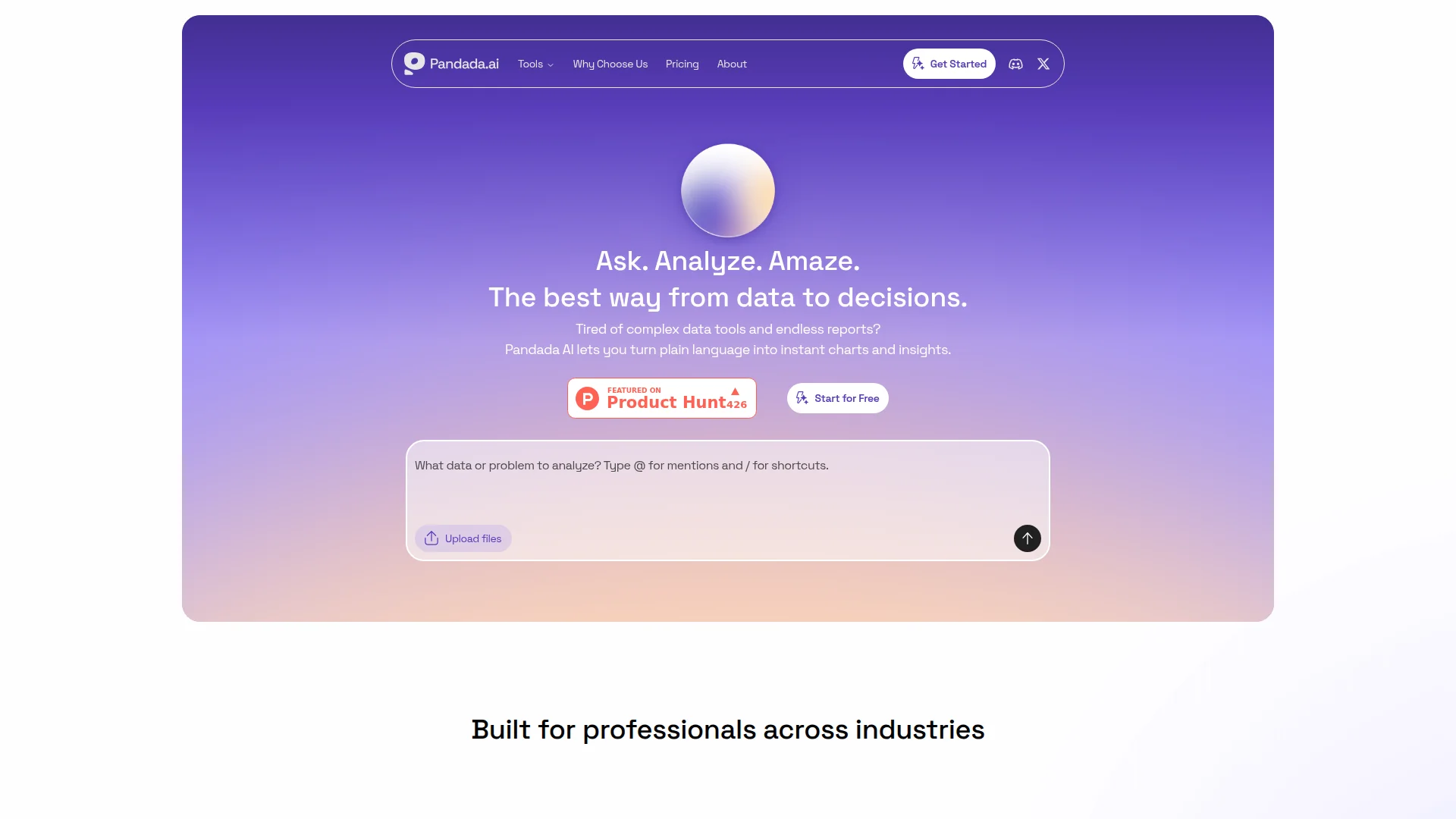
Turn messy data into clear, decision-ready reports.
About Pandada AI
Advertiser Disclosure: Futurepedia.io is committed to rigorous editorial standards to provide our users with accurate and helpful content. To keep our site free, we may receive compensation when you click some links on our site.
Key Features
- File-to-report automation: Upload spreadsheets, CSVs, PDFs, or images of tables and Pandada AI automatically produces structured reports and presentation-style outputs.
- Natural language analysis: Users ask plain-language questions about their data and receive narrative explanations, comparisons, and suggested follow-up views instead of raw query results.
- Decision-focused storytelling: The system emphasizes “McKinsey-level” insight summaries, surfacing key drivers, trends, and takeaways in business language rather than only charts.
- Multi-file handling: Designed to work with multiple messy files at once, letting users combine exports from different tools into one coherent analytical story.
Pros
- Friendly for non-technical roles: Operators, founders, and managers can upload familiar files and get plain-language narratives without learning SQL or BI tooling.
- Strong first-draft output: Quickly generates reports and slide-ready content that analysts or leaders can refine instead of starting from a blank page.
- Good for messy, real-world data: Designed with imperfect spreadsheets, inconsistent exports, and screenshots in mind, which fits how many small teams actually store data.
- Clear decision orientation: The product’s framing around “data wealth” nudges users toward business decisions and storytelling, not just descriptive stats.
Cons
- Limited public detail on governance: Information about access controls, compliance standards, and data residency is not prominent, which may slow enterprise adoption.
- Upload-centric model: Best suited to file-based workflows; organizations that rely on live data warehouses may want deeper native connections than are currently visible.
- Prompt sensitivity: Getting exactly the tone, depth, and chart mix desired will likely require some iteration and prompt experimentation.