Osam AI
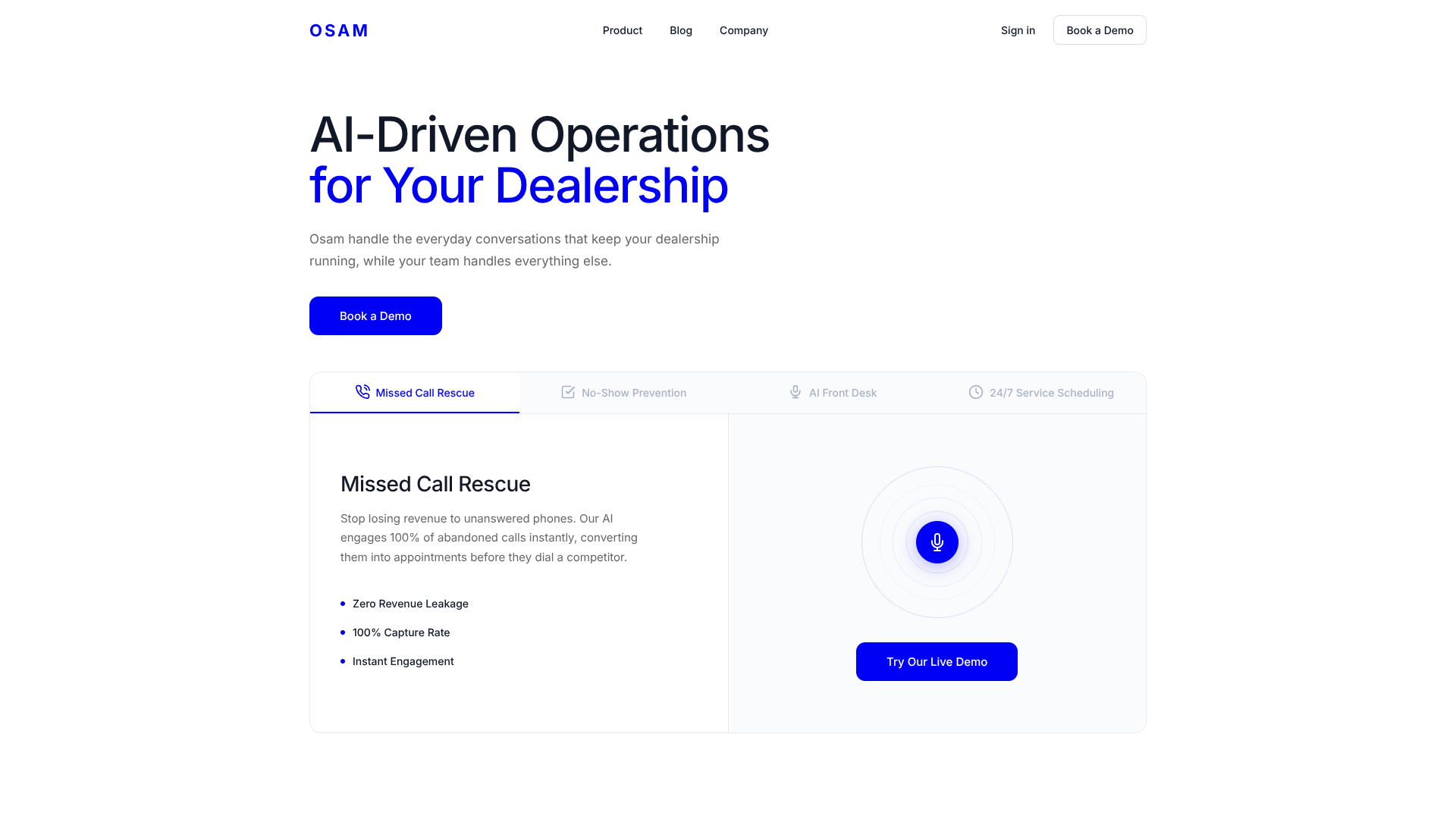
Answer every dealership call, book service 24/7.
About Osam AI
Advertiser Disclosure: Futurepedia.io is committed to rigorous editorial standards to provide our users with accurate and helpful content. To keep our site free, we may receive compensation when you click some links on our site.
Key Features
- 3rd-Generation LLM Voice Engine: Uses large language models to support natural, multi-turn conversations that handle edge cases, unexpected phrasing, and both inbound and outbound use cases.
- Dealership-Specific Workflows: Ships with automotive-focused flows such as missed call rescue, no-show prevention, AI front desk, and 24/7 service scheduling tailored to dealer operations.
- 24/7 AI Front Desk Coverage: Answers every call at any hour, routes callers to the right place, responds to common questions, and keeps the store "always open" even when the showroom is dark.
- Performance-Focused Outcomes: Markets concrete impact such as 100 percent answer rate during peak times, 70 percent call deflection, zero hold time, and 45+ staff hours saved per month.
Pros
- Automotive Focus: Purpose-built for dealerships, so terminology, call flows, and KPIs line up with real dealer needs instead of generic contact center logic.
- Revenue-Oriented Story: Emphasizes capturing missed calls and converting them into booked appointments and added monthly revenue, not just cost cutting.
- Staff Efficiency Gains: Offloads repetitive FAQs and scheduling so advisors can focus on in-person customers and higher-value tasks.
- Modern Conversational Quality: LLM-based voice gives a more natural experience than legacy IVR menus that force touch-tone navigation.
Cons
- Niche Scope: Designed primarily for automotive retail, so it will not be the right fit for non-dealer environments.
- Opaque Public Pricing: No transparent plan grid on the site, which makes early-stage budgeting harder until a sales conversation happens.