OpenClaw
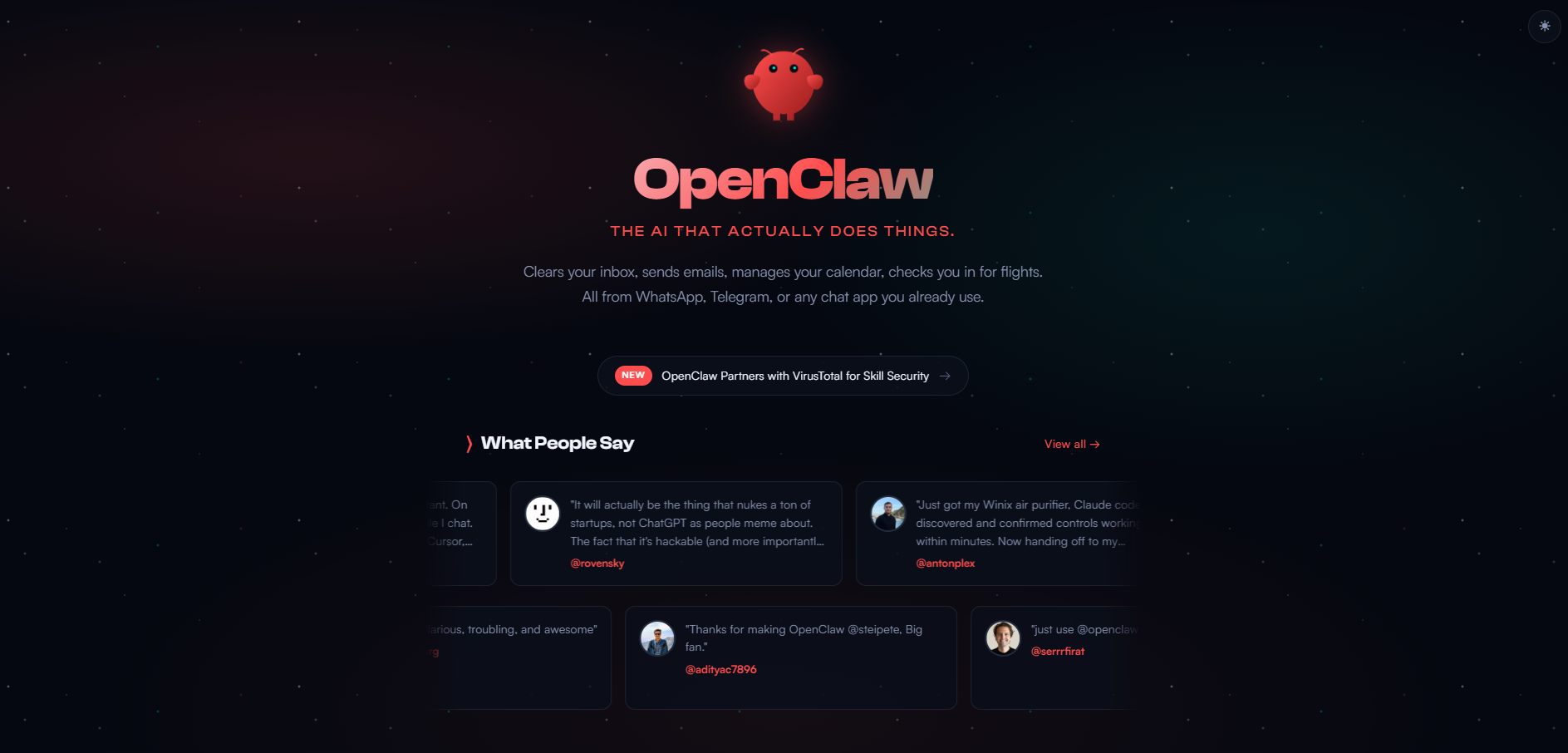
Control your computer and apps from any chat.
About OpenClaw
Advertiser Disclosure: Futurepedia.io is committed to rigorous editorial standards to provide our users with accurate and helpful content. To keep our site free, we may receive compensation when you click some links on our site.
Key Features
- On-device runtime and model choice: Runs on macOS, Windows, and Linux, connects to Anthropic, OpenAI, or local models, and gains direct access to files, shell, and apps.
- Multi-channel chat interface: Single assistant reachable from WhatsApp, Telegram, Discord, Slack, Signal, and iMessage across DMs and group chats.
- Persistent long-term memory: Stores memory about preferences, projects, and contacts so conversations feel continuous instead of stateless prompts.
- Browser and app control: Uses browser automation and integrations to browse sites, fill forms, scrape data, post content, and control services.
- Skills, plugins, and security: Supports community-built skills, virus-scanned extensions, and even auto-generated skills that OpenClaw can write for itself.
Pros
- Serious automation from chat: Lets users clear inboxes, coordinate calendars, and run code or tests just by sending messages.
- Privacy and control: Open source and local-first design appeals to privacy-conscious users who dislike handing SaaS full account access.
- Extensible for power users: Highly extensible via plugins, skills, and scripts, so power users can shape the assistant around niche workflows.
- Broad life coverage: Works across personal, academic, and business contexts, replacing many small tools and even some virtual assistants.
Cons
- Technical setup expectations: Installer helps, but advanced configuration still expects comfort with terminals, APIs, and debugging integrations.
- Model and API dependence: Quality and latency depend heavily on chosen models and cloud providers, which may change pricing or limits.
- High-privilege risk: Granting file system and browser control carries risk if prompts, skills, or permissions are not carefully reviewed.