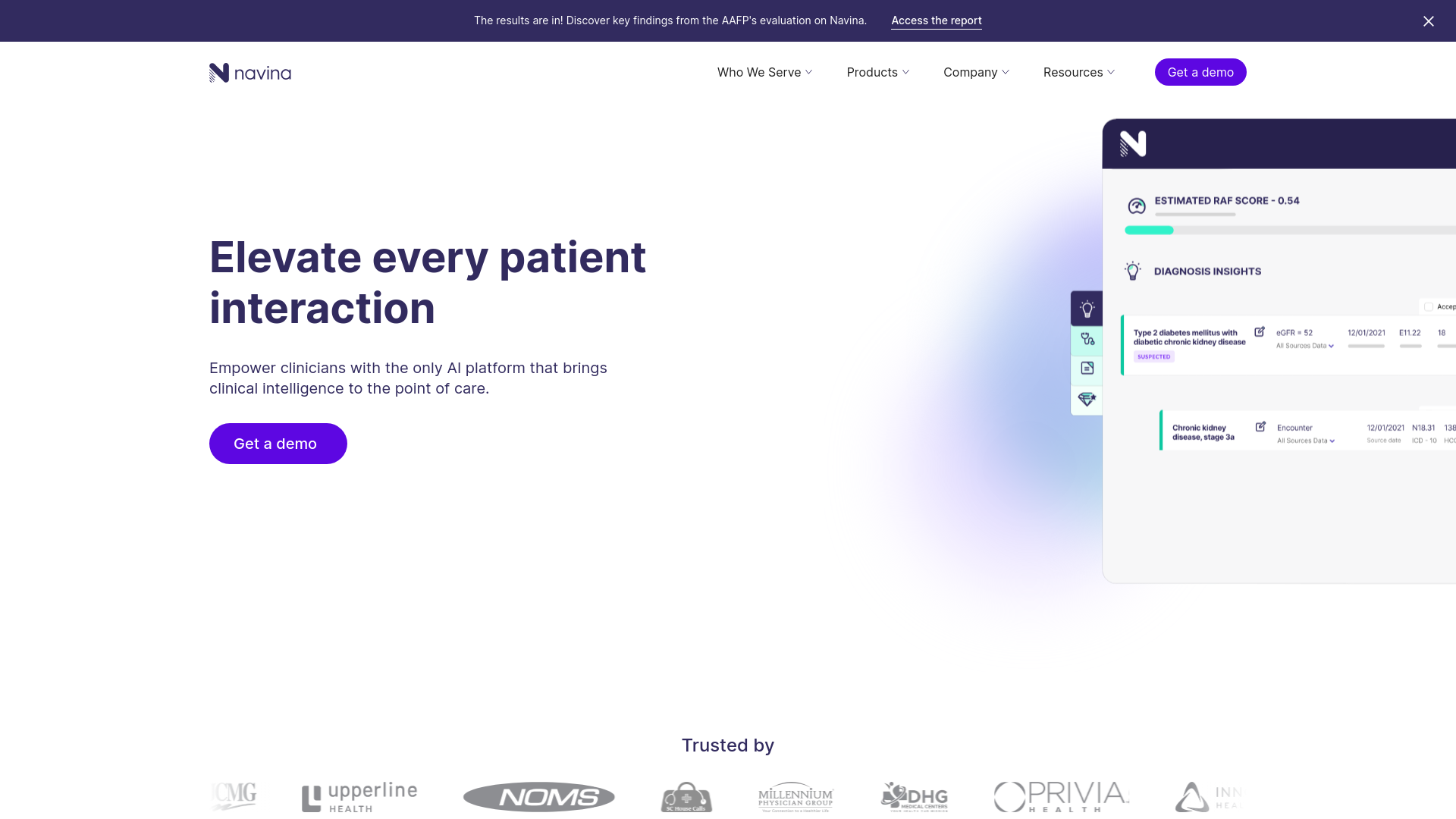
Navina
Transforming chaotic healthcare data into actionable insights for clinicians.
About Navina
Advertiser Disclosure: Futurepedia.io is committed to rigorous editorial standards to provide our users with accurate and helpful content. To keep our site free, we may receive compensation when you click some links on our site.
Key Features
- AI Engine: Navina's core technology processes unstructured healthcare data, transforming it into structured, actionable insights.
- Data Structuring: Advanced algorithms for searching and exploring documents, making data retrieval straightforward and efficient.
- Risk Adjustment: Uses AI to improve diagnosis accuracy and ensure appropriate risk adjustment in patient care.
- Quality Management: Helps in closing care gaps at the point of care, ensuring high standards are maintained consistently.
Pros
- Efficiency in Pre-Visit Planning: Allows healthcare providers to prepare for patient visits more effectively, saving time and improving care quality.
- Enhanced Diagnosis Accuracy: Improves the accuracy of diagnoses with AI-powered suggestions, leading to better patient outcomes.
- Reduced Physician Burden: Minimizes the time physicians spend searching for patient information, allowing more time for direct patient care.
- Increased Revenue: Through improved risk adjustment processes, Navina can significantly enhance the financial outcomes for healthcare providers.
Cons
- Integration Complexity: While integration is streamlined, initial setup with existing EHR systems can be complex.
- Learning Curve: New users may require some time to fully adapt to the AI features and data presentation.
- Dependence on Data Quality: The effectiveness of the AI is highly dependent on the quality and completeness of the input data.