Intrascope
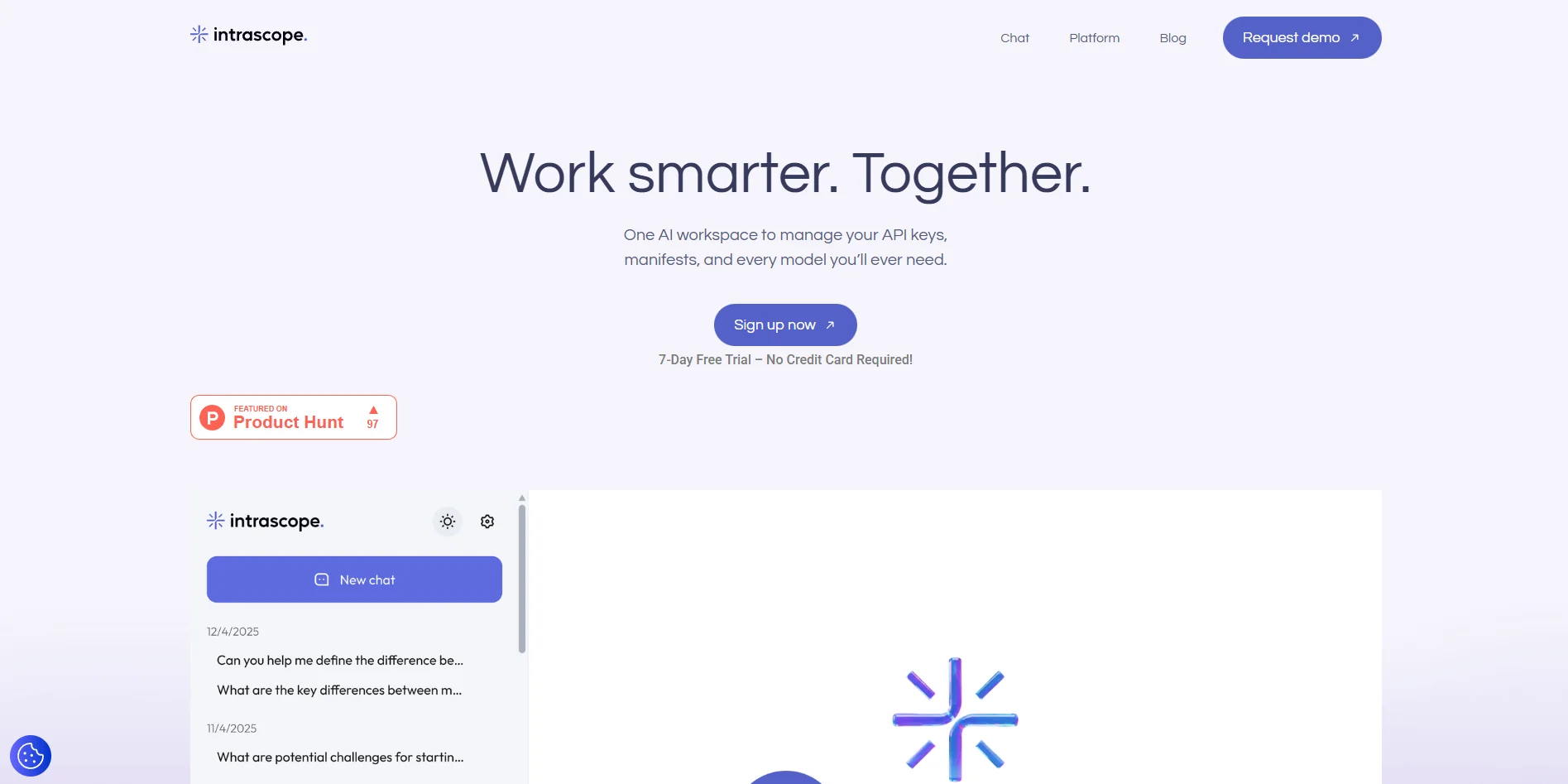
Centralize team AI chats, models, and spending.
About Intrascope
Advertiser Disclosure: Futurepedia.io is committed to rigorous editorial standards to provide our users with accurate and helpful content. To keep our site free, we may receive compensation when you click some links on our site.
Key Features
- Shared Team Workspace: One company workspace with admin controlled access, individual logins, and personal histories, all operating in the same team context and using a single API key source.
- Multi LLM Access in One UI: Users can switch between OpenAI, DeepSeek, Gemini, Claude, and others inside a familiar chat interface, while the platform tracks which model handled which work.
Pros
- Strong Governance: Centralizes permissions, API keys, and manifests so leaders can standardize how AI is used across departments.
- Cost Control Focus: BYO keys, usage analytics, and token comparisons help teams choose cheaper or faster models instead of guessing.
- Security First Positioning: Encrypted conversations, isolated workspaces, and no training on customer data appeal to privacy sensitive organizations.
- Low Friction Adoption: The interface behaves like familiar chat tools, so non technical roles such as writers or support agents can join without special training.
Cons
- Single Shared API Key Model: One key per workspace simplifies billing but may feel limiting for enterprises that want per team or per project keys.
- Ecosystem Still Young: Roadmap items such as image tools, unified assistant across projects, and agentic workflows are planned rather than fully delivered, so early buyers are partly betting on future development.
- Limited Third Party Integrations Today: The focus is on LLM APIs and the web app; deep integrations into tools like Slack or Jira are not a headline feature yet.