Graswald
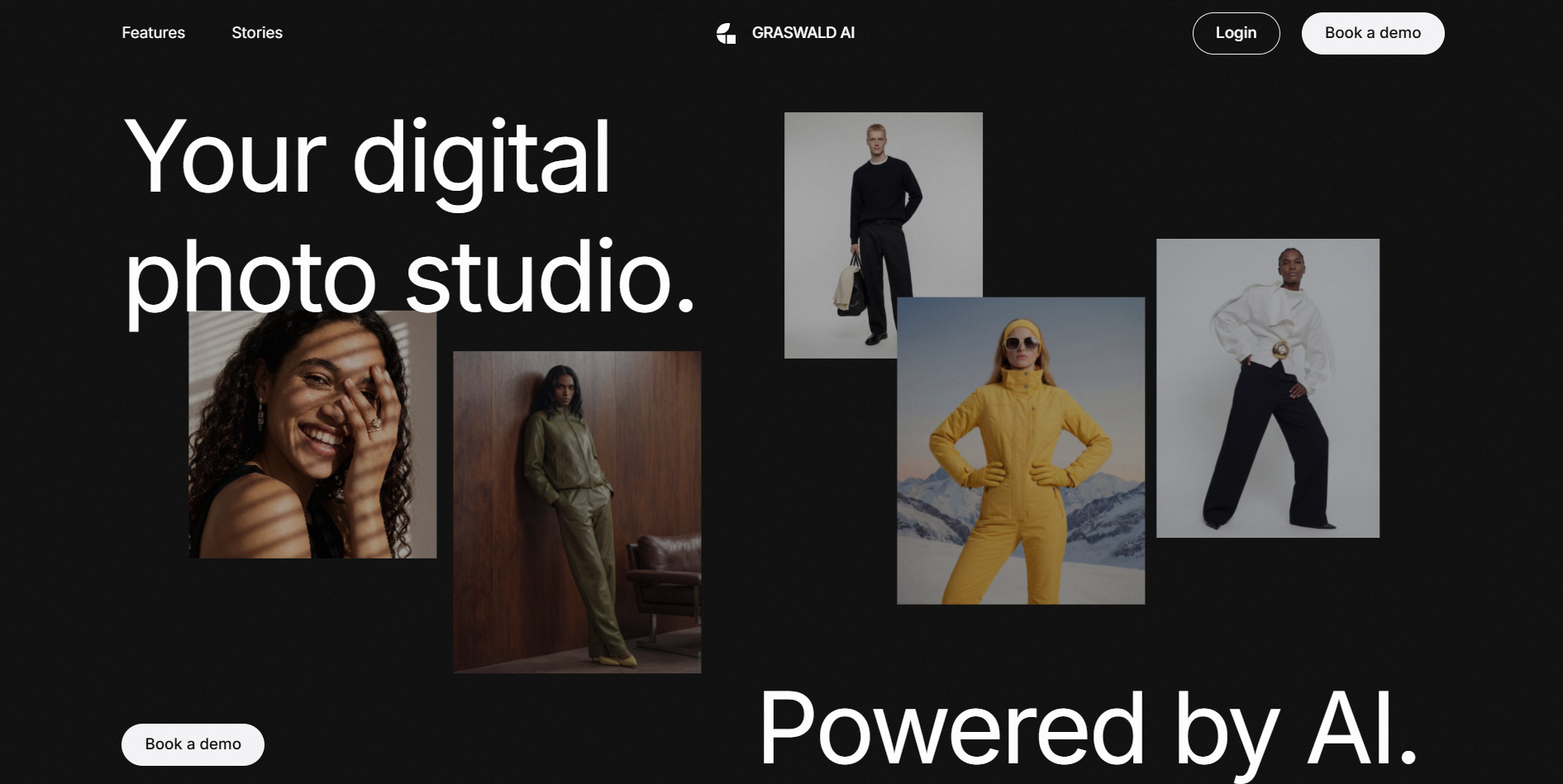
Create on-brand fashion product photos without photoshoots.
About Graswald
Advertiser Disclosure: Futurepedia.io is committed to rigorous editorial standards to provide our users with accurate and helpful content. To keep our site free, we may receive compensation when you click some links on our site.
Key Features
- Digital Twin Product Models: Train Graswald AI on your catalog images so it can reproduce each item accurately in new scenes, lighting setups, and crops without re-shooting the product.
- Curated Human Poses: Reuse pose presets or define your own “brand poses” so models appear with repeatable framing and body language across collections, lookbooks, and PDP galleries.
- Synthetic Avatars: Create synthetic models from text prompts, then reuse the same avatar across campaigns. Graswald AI trains on the chosen avatar so it can reproduce that face and body consistently.
- Virtual Try-On for Avatars: Dress avatars in any trained product or new flat-lay upload, quickly exploring outfit combinations, tops and bottoms, and different styling angles without staging a shoot.
- Custom AI Models & Live Demos: Brands can request custom model setups and watch live demos showing how to go from flat-lays or sample shots to lifestyle and PDP images in just a few minutes.
Pros
- Cost Savings: Reduces spending on studio time, models, travel, and retouching by shifting much of the content creation into an AI workflow.
- Brand Consistency: Digital twins, reusable avatars, and locked-in poses help maintain a coherent visual identity across seasons and channels.
- Speed to Market: New product visuals can be created shortly after samples arrive, helping e-commerce teams publish PDPs and campaigns faster.
- Creative Flexibility: Art directors can test many concepts, styles, and backgrounds without committing to physical sets, then lock in what works at scale.
- Scalability for Large Catalogs: Once products and avatars are trained, the same pipeline can be used to produce hundreds or thousands of SKUs with repeatable quality.
Cons
- Sales-Led Onboarding: With a “book a demo” entry point and no instant self-serve pricing, smaller teams may find it harder to quickly experiment.
- Workflow Shift: Photographers, stylists, and marketers need time to adapt briefs, prompts, and QA processes for AI-generated imagery.
- Generative Limitations: Highly complex textures, extreme poses, or unusual fabrics may still require manual oversight or occasional reshoots.