GPT Engineer
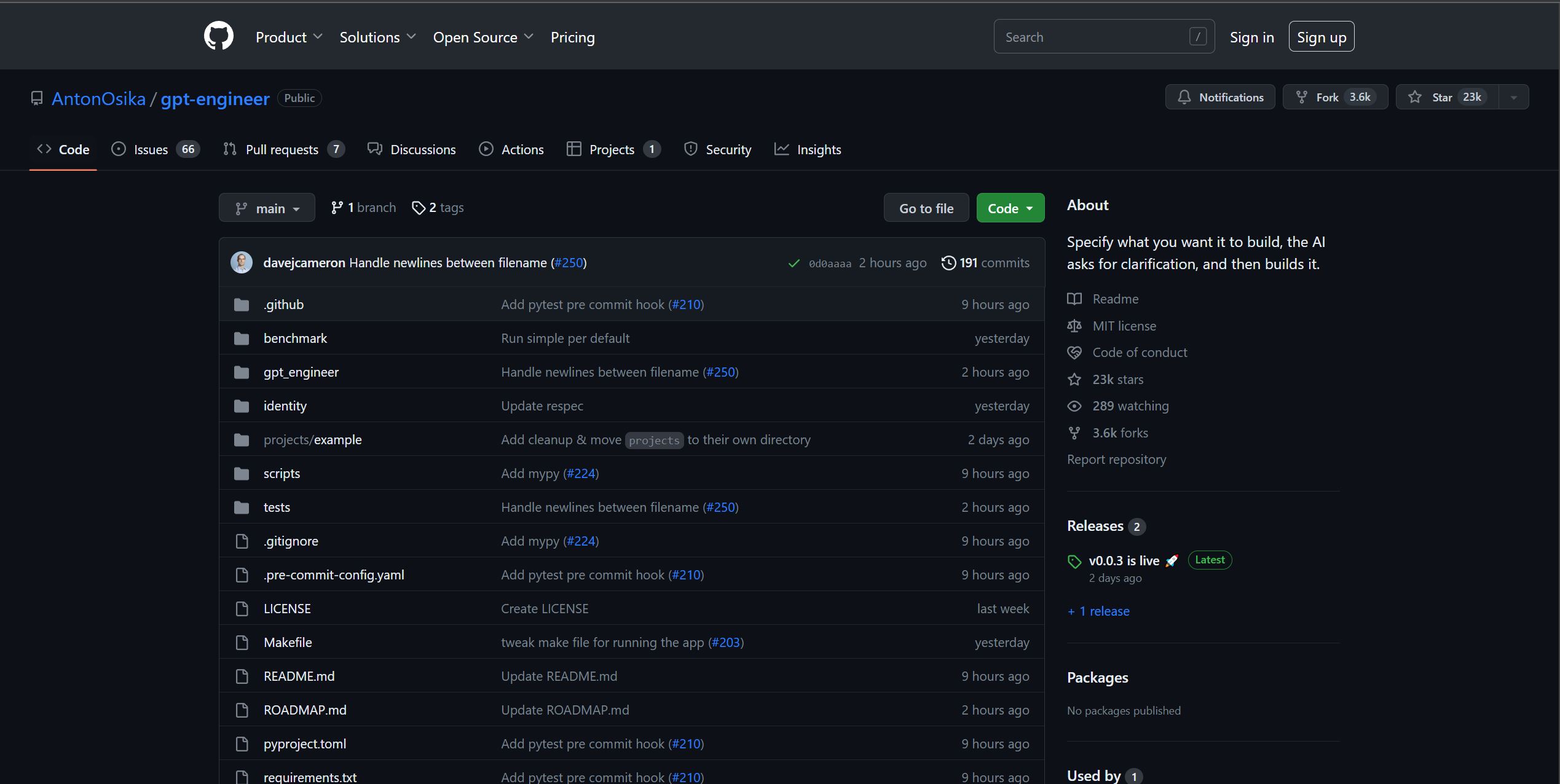
Transforms natural language into executable code; boosts development efficiency.
About GPT Engineer
Advertiser Disclosure: Futurepedia.io is committed to rigorous editorial standards to provide our users with accurate and helpful content. To keep our site free, we may receive compensation when you click some links on our site.
Key Features
- Natural Language Understanding: Interprets user input written in everyday language to understand the software requirements.
- Interactive Clarification Process: Engages with users to refine and clarify development instructions.
- Automated Code Generation: Transforms clarified instructions into executable code.
- Support for Multiple Python Versions: Compatible with Python versions 3.10 to 3.12, with legacy support for versions 3.8 and 3.9 up to release 0.2.6.
- Customizable AI Identity: Allows users to specify the "identity" of the AI agent for a personalized development assistant.
- Open Source Model Compatibility: Offers the flexibility to run with open-source models like WizardCoder.
Pros
- Efficiency Booster: Accelerates the coding process by automating routine tasks.
- User-Friendly: Simplifies complex coding tasks for both technical and non-technical users.
- Continuous Learning: Adapts and learns from each interaction, potentially improving over time.
- Open Source Community Support: Benefits from a community-driven approach to development and enhancements.
Cons
- Potential for Misinterpretation: As with any AI, there's a risk of misinterpreting complex instructions.
- Dependence on Clear Specifications: Requires clear and structured input to produce accurate results.
- Limited to Web-App Generation: The current focus is on web-app generation, which may limit its use for other types of software.