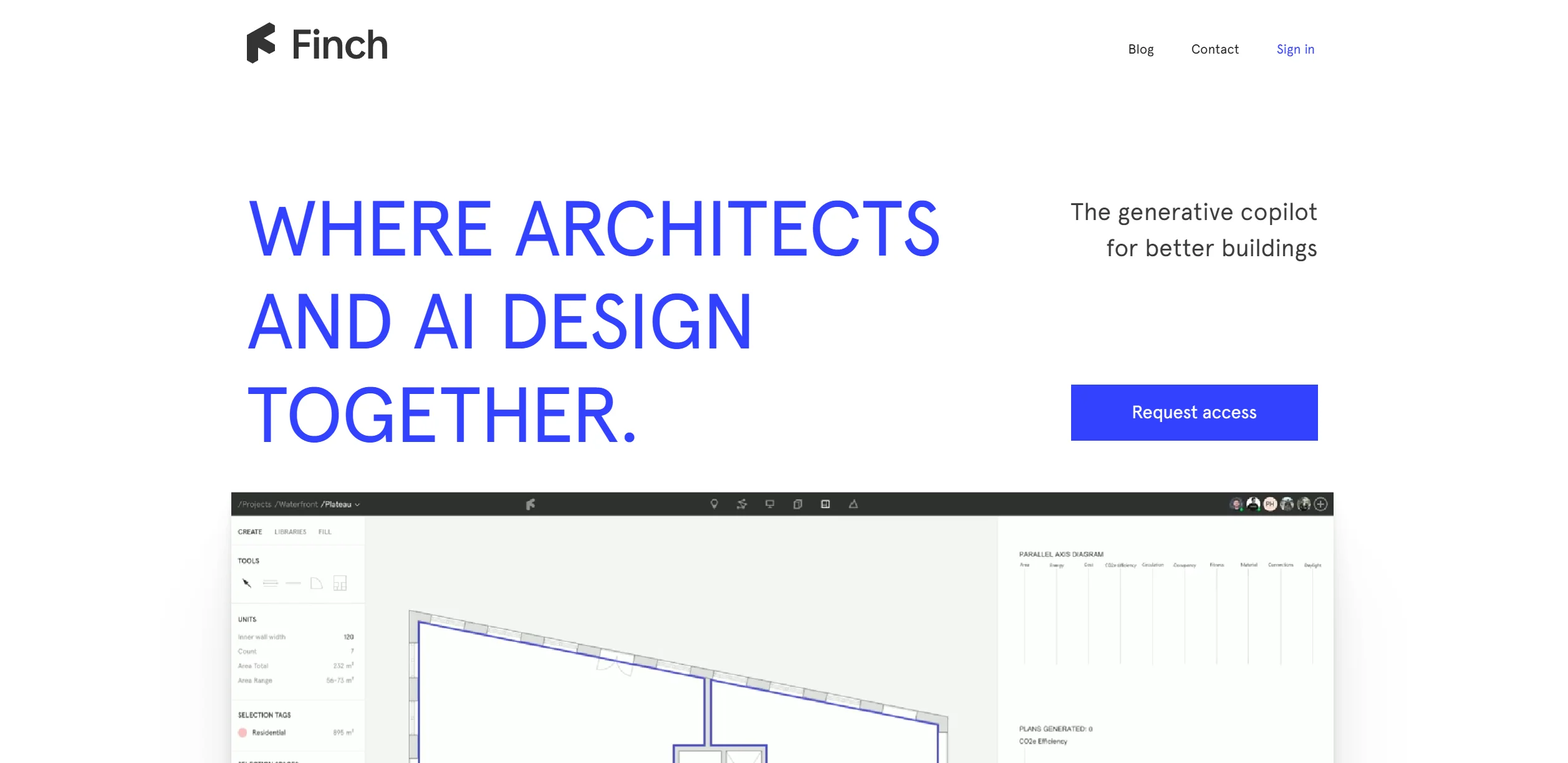
Finch 3D
AI-driven platform enhances architectural design creativity and efficiency.
About Finch 3D
Advertiser Disclosure: Futurepedia.io is committed to rigorous editorial standards to provide our users with accurate and helpful content. To keep our site free, we may receive compensation when you click some links on our site.
Key Features
- Generative Design Technology: Finch empowers architects to rapidly iterate and explore a multitude of design options, automatically generating floor plans and refining designs with ease.
- Instant Data Feedback: The tool provides immediate performance feedback, guiding informed design decisions and streamlining feedback loops with data-backed insights.
- Seamless Integration: Finch effortlessly integrates with popular design tools like Revit, Rhino, and Grasshopper, fitting smoothly into existing workflows without disrupting current processes.
- Error Prevention and Compliance: Built-in error prevention mechanisms ensure designs remain compliant with firm, customer, and municipal regulations, allowing architects to focus on creativity.
Pros
- Enhanced Creativity: Facilitates the exploration of diverse design options, inspiring architects to push creative boundaries.
- Time Efficiency: Dramatically reduces the time required for design iterations, enabling architects to produce optimized designs faster.
- User-Centric Design: Offers a simple, intuitive interface that is easier than pen and paper, keeping architects in their creative flow.
- Comprehensive Integration: Supports a wide range of existing design tools, eliminating entry barriers for users.
Cons
- Invite-Only Access: Currently, Finch is available by invitation only, which may limit immediate access for all interested users.
- Learning Curve: While intuitive, mastering the full potential of the tool's advanced features may require some initial learning.