Dex
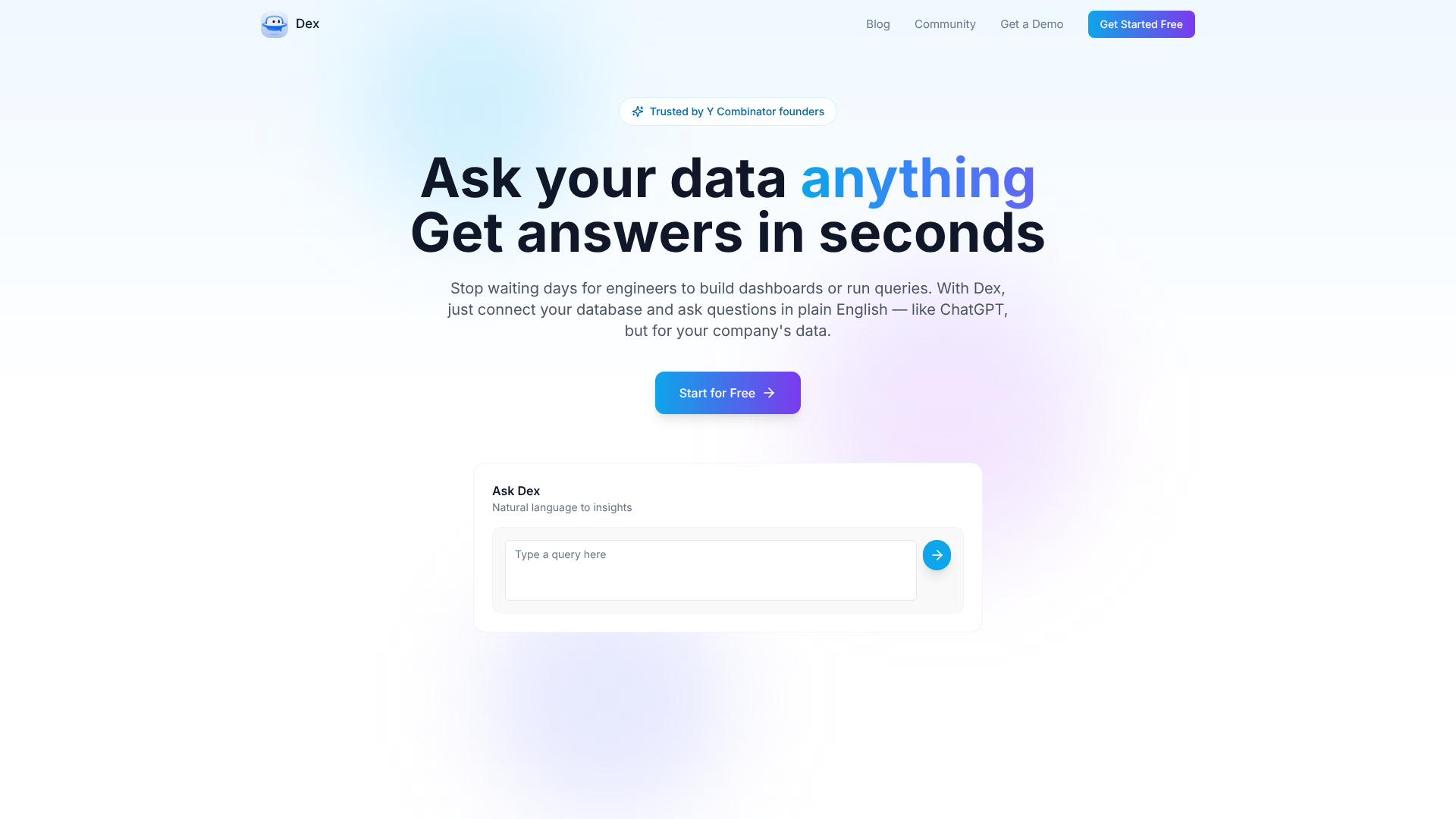
Build reliable SQL data pipelines faster with copilot.
About Dex
Advertiser Disclosure: Futurepedia.io is committed to rigorous editorial standards to provide our users with accurate and helpful content. To keep our site free, we may receive compensation when you click some links on our site.
Key Features
- Unified Data Pipelines: Build ingestion, transformation, and orchestration in one place using SQL and Python, then run workloads on your own cloud warehouse.
- AI Copilot for Data Work: Context‑aware assistant that helps write SQL, design models, and suggest improvements based on existing code and metadata.
- Software Engineering Guardrails: Version control, modular code, automated testing, and CI/CD for analytics projects, not just application code.
- Governance & Observability: Central view of lineage, quality checks, access control, and cost monitoring across pipelines and environments.
- Connector & Collection Layer: Managed connectors and change‑data‑capture pipelines that sync data from many operational systems into analytics storage.
Pros
- All‑In‑One Environment: Reduces the need to juggle separate tools for ingestion, ETL, orchestration, and monitoring.
- Productivity Gains: Customers have reported large cuts in pipeline delivery time and data‑platform maintenance overhead.
- AI Assistance For Non‑Experts: Lets analysts with limited engineering background ship higher‑quality pipelines with fewer code errors.
- Good Fit For AI/ML Teams: Designed to serve BI, ML, and data science from the same curated pipelines and governed data sets.
Cons
- Uncertain Product Future: With the team now at Nubank and the public platform scheduled to shut down, long‑term access is a concern for new users.
- Migration Effort: Pipelines and workflows are expressed in Dex’s patterns, so exiting likely involves re‑implementing logic elsewhere.
- Requires Modern Warehouse: Best suited to organizations already invested in cloud data warehouses and central data infrastructure.